

Search Articles
Journal:
all
Keyword:
food service
Total
—
11 articles
Article 11 Jan 2026
John C. G. Lee, Yeney Widya Prihatiningtias, Febryanti Simon and Samantha Siu Ling Lee
Indonesia’s National Free Meals Programme (NFMP) faces systemic challenges of fragmented implementation across agricultural, educational, and logistical sectors. These systemic challenges are compounded by inequitable reach in its archipelagic geography, where rural infrastructure gaps exacerbate disparities.
Indonesia’s National Free Meals Programme (NFMP) faces systemic challenges of fragmented implementation across agricultural, educational, and logistical sectors. These systemic challenges are compounded by inequitable reach in its archipelagic geography, where rural infrastructure gaps exacerbate disparities. This study examines these issues through an integrated theoretical framework—combining Policy Transfer, Multi-stakeholder Governance, and Sustainable Livelihoods theories—using a mixed-methods approach that synthesises global policy benchmarks, peer-reviewed literature, and Sustainable Development Goal (SDG) alignment metrics. Key findings identify governance fragmentation, supply chain inefficiencies (notably 15–20% food spoilage in eastern regions), and digital divides as critical constraints. The research proposes a three-tiered intervention framework: (1) geospatially tailored procurement mechanisms; (2) incentivised corporate partnerships for cold-chain infrastructure; and (3) co-created R&D for climate-resilient crops. These strategies synergistically advance SDG 1 (Poverty Reduction), SDG 2 (Zero Hunger), and SDG 4 (Quality Education), demonstrating potential for farmer income gains, reduced child stunting, and improved school attendance. The study contributes to theoretical debates on adaptive policy transfer and offers Indonesia a scalable blueprint for integrated food-security transformation in archipelagic contexts.
or
Access Full Article
258 Views62 Downloads
Article 26 Nov 2025
Kurt Orkun Aktaş, Ajda Zaim, Özlem Nur Aslantamer, Gözen Güner Aktaş and Hüseyin Emre Ilgın
Highlights of Sustainability
Volume 4 (2025), Issue 4, pp. 256–284
Volume 4 (2025), Issue 4, pp. 256–284
718 Views121 Downloads
Article 20 Feb 2025

Anna C. Schomberg, Clemens Mostert and Stefan Bringezu
Highlights of Sustainability
Volume 4 (2025), Issue 1, pp. 38–55
Volume 4 (2025), Issue 1, pp. 38–55
3558 Views2078 Downloads
Article 8 Nov 2024
Chioma Ezeanaka and Trung Hieu Tran
Highlights of Sustainability
Volume 3 (2024), Issue 4, pp. 374–393
Volume 3 (2024), Issue 4, pp. 374–393
5509 Views792 Downloads
Review 18 Apr 2024
Md Tasbirul Islam, Usha Iyer-Raniga and Amjad Ali
Highlights of Sustainability
Volume 3 (2024), Issue 2, pp. 129–162
Volume 3 (2024), Issue 2, pp. 129–162
8495 Views1114 Downloads5 Citations
Article 27 Mar 2024
Hannes Antonschmidt
Highlights of Sustainability
Volume 3 (2024), Issue 2, pp. 116–128
Volume 3 (2024), Issue 2, pp. 116–128
2596 Views695 Downloads
Editorial 21 Dec 2023
Highlights of Sustainability Editorial Office
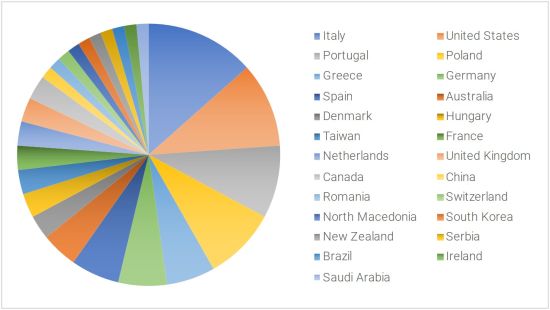
Highlights of Sustainability
Volume 2 (2023), Issue 4, pp. 303–304
Volume 2 (2023), Issue 4, pp. 303–304
2461 Views396 Downloads
Article 20 Dec 2023
Mouna Samaali, El-Hassane Aglzim, Xavier Dessertenne and Patrick Dubreuille
Highlights of Vehicles
Volume 1 (2023), Issue 2, pp. 68–85
Volume 1 (2023), Issue 2, pp. 68–85
3050 Views992 Downloads
Commentary 24 Feb 2023
Ada Rocha and Cláudia Viegas
Food service comprises the production of meals consumed outside the home, including consumers from all age groups and in different sectors, such as schools (from kindergarten to university), public and private companies, the health sector (from
Food service comprises the production of meals consumed outside the home, including consumers from all age groups and in different sectors, such as schools (from kindergarten to university), public and private companies, the health sector (from hospitals to elderly care institutions), military, sports facilities and restaurants (from fine dining to fast-food). Food service units (FSU) achieved importance and responsibility not only for feeding the population but also as an important setting for public health interventions, potentially educating consumers and modulating behaviours through the meals provided. In addition to its socioeconomic impact, the food service industry has a strong environmental impact. More sustainable food service starts with the basics: minimizing environmental impact by reducing carbon footprint. Food service industry is being encouraged to make choices that positively impact the environment. Nevertheless, most of the efforts and research made in the last years have been focused on evaluating and reducing food waste. This article focuses on strategies that could be implemented beyond food waste, and act on changing the food offer towards health and sustainability while promoting consumers’ behaviour change.
or
Access Full Article
Highlights of Sustainability
Volume 2 (2023), Issue 1, pp. 10–15
Volume 2 (2023), Issue 1, pp. 10–15
5087 Views1610 Downloads2 Citations
Editorial 22 Dec 2022
Highlights of Sustainability Editorial Office
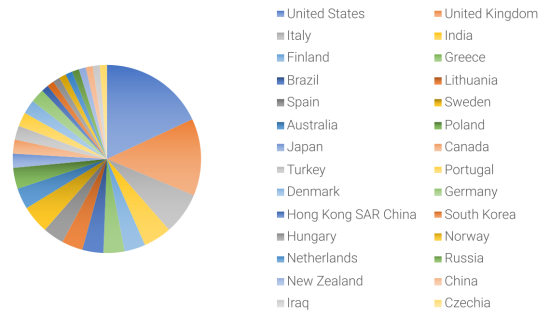
Highlights of Sustainability
Volume 1 (2022), Issue 4, pp. 253–254
Volume 1 (2022), Issue 4, pp. 253–254
3247 Views628 Downloads

Volume 5 (2026), Issue 1, pp. 1–14