
Article Peer-Reviewed

Sustainable Workplace: LGBTQ+ Policies in the Thai Business Sector
College of Management, Mahidol University, Bangkok 10400, Thailand
Academic Editor:

Received: 2 July 2025 Accepted: 15 January 2026 Published: 2 February 2026
Abstract
This study investigates how Thai businesses integrate gender inclusion into their sustainability and corporate governance agendas, with a specific focus on human rights and environmental, social, and governance frameworks. Drawing on qualitative content analysis of public disclosures from 10 leading firms listed on the Stock Exchange of Thailand, the research explores how corporate actors articulate, implement, and monitor gender diversity policies. The findings indicate that while most companies focus on non-discrimination and align with international standards, such as the United Nations Guiding Principles on Business and Human Rights and the Office of the High Commissioner for Human Rights Standards of Conduct, implementation remains largely procedural. Only a limited number of Thai firms explicitly recognize employees from all gender identities as a distinct group or adopt targeted measures addressing their needs and vulnerabilities. The paper argues that advancing sustainable and inclusive workplaces requires businesses to move beyond symbolic compliance and embed gender issues within corporate strategy, leadership development, and stakeholder engagement. To achieve this, companies should strengthen human rights due diligence, enhance transparency in reporting, and establish partnerships with civil society to foster inclusive learning environments.
Figures in this Article
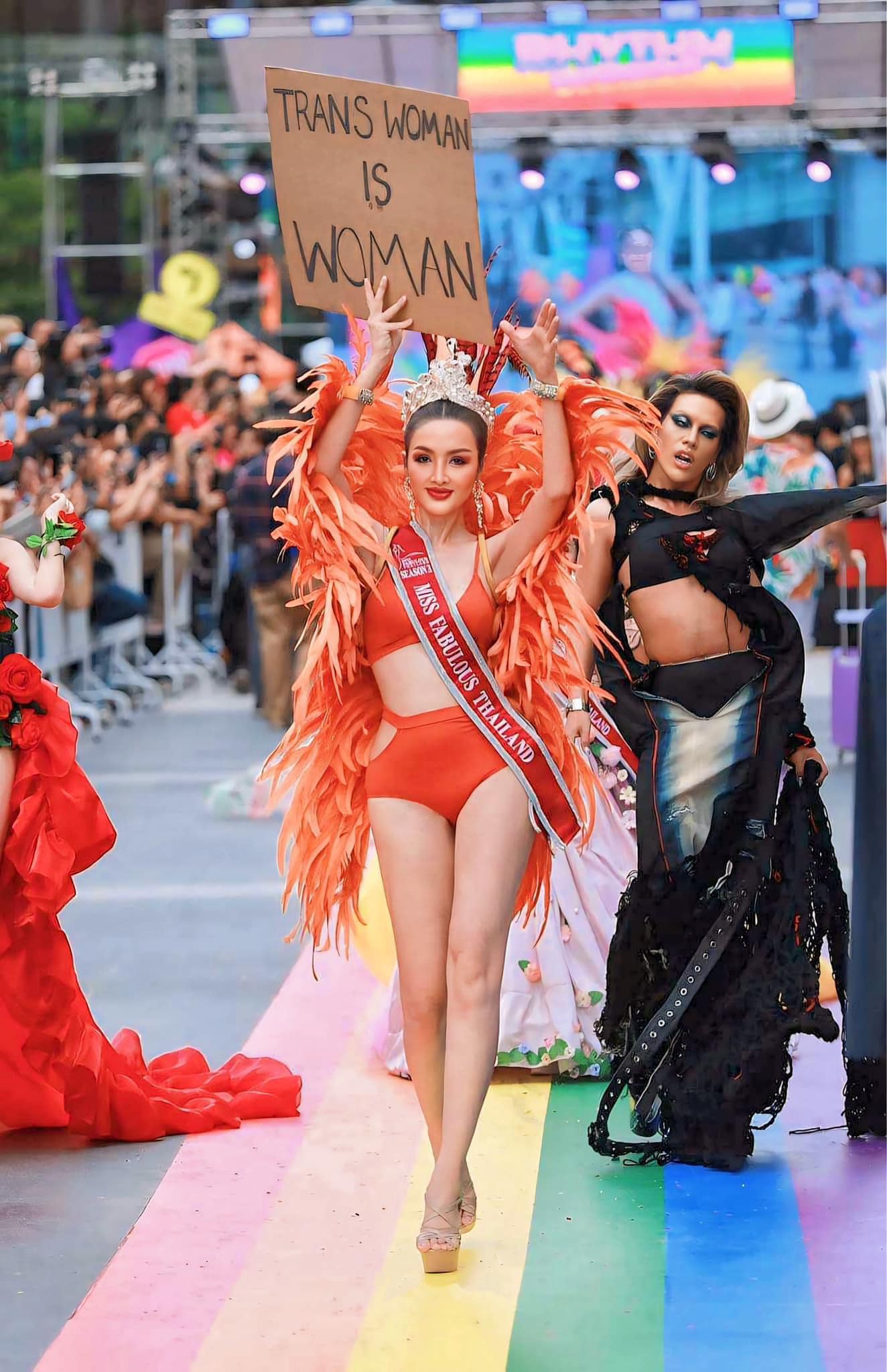 Figure 1
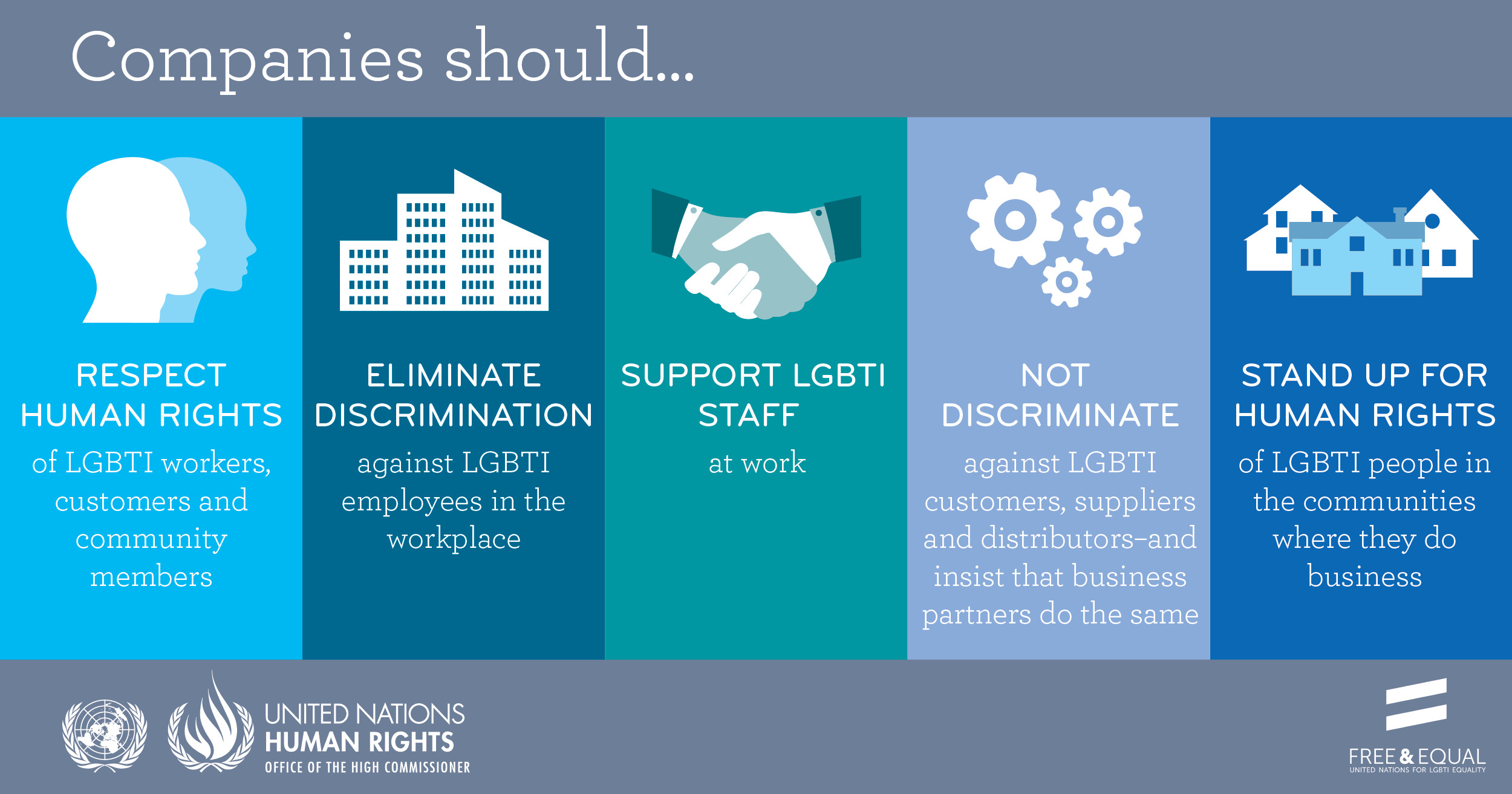 Figure 2
Keywords
gender diversity; sustainable workplace; equality; Diversity, Equity, and Inclusion (DE&I); Thailand; Sustainable Development Goal 5 (SDG 5)
Copyright © 2026
Pimpa. This article is distributed under the terms of the Creative Commons Attribution License (CC BY 4.0), which permits unrestricted use and distribution provided that the original work is properly cited.
Funding
This research received no specific grant from any funding agency in the public, commercial, or not-for-profit sectors.
Cite this Article
Pimpa, N. (2026). Sustainable Workplace: LGBTQ+ Policies in the Thai Business Sector. Highlights of Sustainability, 5(1), 84–103. https://doi.org/10.54175/hsustain5010007
References
1.
Achyldurdyyeva, J., Wu, L., & Datova, N. (2021). Understanding LGBT individuals’ employment environment in Taiwan: a relational framework perspective. Equality Diversity and Inclusion: An International Journal, 42(5), 656–684. https://doi.org/10.1108/edi-02-2020-0042
2.
Hornsby, E. (2006). Using policy to drive organizational change. New Directions for Adult and Continuing Education, 2006(112), 73–83. https://doi.org/10.1002/ace.238
3.
Núñez, R., Bandeira, P., & Sánchez, R. (2020). Social economy, gender equality at work and the 2030 agenda: theory and evidence from Spain. Sustainability, 12(12), 5192. https://doi.org/10.3390/su12125192
4.
García Johnson, C. P., & Otto, K. (2019). Better Together: A Model for Women and LGBTQ Equality in the Workplace. Frontiers in Psychology, 10, 365331. https://doi.org/10.3389/fpsyg.2019.00272
5.
Tinoco-Giraldo, H., & Voorhies, P. (2020). LGBTQIA+ employee learning needs assessment using an ethnographic approach. In Eighth International Conference on Technological Ecosystems for Enhancing Multiculturality (pp. 130–136). Association for Computing Machinery. https://doi.org/10.1145/3434780.3436563
6.
OECD. (2010). Open for Business. Migrant Entrepreneurship in OECD Countries. https://doi.org/10.1787/9789264095830-en
7.
Paklapas, M., Punyalikit, R., & Joneurairatana, E. (2024). The Rainbow Dichotomy: Evaluating Perceptions of “Rainbow-Washing” in Pride Month Marketing Campaigns Among LGBTQ+ and Heterosexual Consumers in Thailand. Journal of Roi Kaensarn Academi, 9(12), 2704–2719.
8.
Brahma, S., Gavriilidis, K., Kallinterakis, V., Verousis, T., & Zhang, M. (2023). LGBTQ and finance. International Review of Financial Analysis, 86, 102547. https://doi.org/10.1016/j.irfa.2023.102547
9.
United Nations Development Programme (UNDP). (2019). Tolerance but not Inclusion: A national survey on experience of discrimination and social attitude towards LGBT people in Thailand. https://www.undp.org/publications/tolerance-not-inclusion (accessed 27 January 2026).
10.
Githens, R. P. (2009). Capitalism, Identity Politics, and Queerness Converge: LGBT Employee Resource Groups. New Horizons in Adult Education and Human Resource Development, 23(3), 18–31. https://doi.org/10.1002/nha3.10347
11.
Mehari, A. T., Ayenew Birbirsa, Z., & Nemera Dinber, G. (2024). The effect of workforce diversity on organizational performance with the mediation role of workplace ethics: Empirical evidence from food and beverage industry. PLOS ONE, 19(7), e0297765. https://doi.org/10.1371/journal.pone.0297765
12.
Yang, S. H., & Jeong, B. Y. (2020). Gender differences in wage, social support, and job satisfaction of public sector employees. Sustainability, 12(20), 8514. https://doi.org/10.3390/su12208514
13.
Perales, F., Ablaza, C., Tomaszewski, W., & Emsen-Hough, D. (2022). You, Me, and Them: Understanding Employees’ Use of Trans-Affirming Language within the Workplace. Sexuality Research and Social Policy, 19(2), 760–770. https://doi.org/10.1007/s13178-021-00592-9
14.
Choi, S. J., Shin, J., Kuper, P., & Zhang, L. Y. (2023). Corporate decisions on LGBT friendliness: A multi-level approach. Management Decision, 61(4), 996–1012. https://doi.org/10.1108/MD-08-2022-1055
15.
Petcharat, N., & Srinammuang, P. (2019). Can Environmental and Social Performance of Thai-listed Companies Create Sustainable Value? Research Journal of Finance and Accounting, 10(10), 223–228. https://doi.org/10.7176/RJFA/10-10-23
16.
Suttipun, M. (2023). ESG Performance and Corporate Financial Risk of the Alternative Capital Market in Thailand. Cogent Business & Management, 10(1), 2168290. https://doi.org/10.1080/23311975.2023.2168290
17.
Barth, M. (2017). No future for LGBT rights in Deep South? Prachathai. https://prachataienglish.com/node/7064 (accessed 27 January 2026).
18.
Calvard, T., O’Toole, M., & Hardwick, H. (2019). Rainbow lanyards: bisexuality, queering and the corporatisation of LGBT inclusion. Work, Employment and Society, 34(2), 356–368. https://doi.org/10.1177/0950017019865686
19.
Dhanani, L. Y., Totton, R. R., & Hall, T. K. (2023). Every action has a reaction: a model of coworker reactions to sexual minority employees’ identity disclosure. Journal of Occupational and Organizational Psychology, 97(2), 602–622. https://doi.org/10.1111/joop.12484
20.
Lawler, J., Siengthai, S., & Atmiyanandana, V. (1997). HRM in Thailand: Eroding Traditions. Asia Pacific Business Review, 3(4), 170–196. https://doi.org/10.1080/13602389700000048
21.
Lippert-Rasmussen, K. (2013). Born Free and Equal? A Philosophical Inquiry into the Nature of Discrimination. Oxford University Press. https://doi.org/10.1093/acprof:oso/9780199796113.001.0001
22.
Gutierrez, L., Montiel, I., Surroca, J., & Tribó, J. (2022). Rainbow Wash or Rainbow Revolution? Dynamic Stakeholder Engagement for SDG-Driven Responsible Innovation. Journal of Business Ethics, 180, 1113–1136. https://doi.org/10.1007/s10551-022-05190-2
23.
Özbilgin, M. F., & Erbil, C. (2024). Rainbow burning to rainbow washing: How (not) to manage LGBT+ inclusion. In Genderwashing in leadership (pp. 135–152). Emerald Publishing. https://doi.org/10.1108/978-1-83753-988-820241010
24.
Pichler, S., Ruggs, E. N., & Trau, R. (2017). Worker outcomes of LGBT-supportive policies: a cross-level model. Equality, Diversity and Inclusion: An International Journal, 36(1), 17–32. https://doi.org/10.1108/edi-07-2016-0058
25.
Hussain, W., Ong, T., Kamarudin, F., Khan, M. A., & Bács, Z. (2024). ESG disclosure, firm internationalization, and firm financial performance: Evidence from Asia-Pacific. Journal of International Studies, 17(2), 240–261. https://doi.org/10.14254/2071-8330.2024/17-2/13
26.
Rahman, H. U., Zahid, M., & Al-Faryan, M. A. S. (2023). ESG and firm performance: The rarely explored moderation of sustainability strategy and top management commitment. Journal of Cleaner Production, 404, 136859. https://doi.org/10.1016/j.jclepro.2023.136859
27.
Kotiloglu, S., & McDonald, A. T. (2023). Is LGBT inclusion motivated by organizational performance? Exploring the relationships between performance feedback and LGBT inclusion in firms. Strategic Organization. https://doi.org/10.1177/14761270231199759
28.
Sookpornsawan, R., Kiatrungrit, K., Seree, P., Korpaisarn, S., & Arunakul, J. (2024). Association between exposure to gender and sexual diversity in media (GSDM) and Thai adolescents’ attitude towards LGBT individuals: a cross-sectional study in Bangkok schools. BMJ Open, 14(12), e089390. https://doi.org/10.1136/bmjopen-2024-089390
29.
United Nations Office of the High Commissioner for Human Rights. (2017). Standards of conduct for business: Tackling Discrimination against LGBTI people in the private sector: Standards of Conduct for Business. https://www.ohchr.org/en/sexual-orientation-and-gender-identity/tackling-discrimination-against-lgbti-people-private-sector-standards-conduct-business (accessed 27 December 2025).
30.
Sudiarta, M., Sekarti, N. K., & Sunarsa, I. W. (2025). Exploring the relationship between employee engagement, job satisfaction, and turnover intention in the hospitality industry. Journal of Commerce, Management, and Tourism Studies, 4(1), 120–135. https://doi.org/10.58881/jcmts.v4i1.321
31.
Srifuengfung, M., Wiwattarangkul, T., Vadhanavikkit, P., Wiwattanaworaset, P., Chiddaycha, M., Oon-Arom, A., et al. (2024). What do LGBTQ+ medical students experience and need in medical school? A multicenter qualitative study in Thailand. Academic Medicine, 99(10), 1117–1126. https://doi.org/10.1097/ACM.0000000000005745
32.
Srikummoon, P., Thanutan, Y., Manojai, N., Prasitwattanaseree, S., Boonyapisomparn, N., Kummaraka, U., et al. (2022). Discrimination against and associated stigma experienced by transgender women with intersectional identities in Thailand. International Journal of Environmental Research and Public Health, 19(24), 16532. https://doi.org/10.3390/ijerph192416532
33.
Fongkaew, K., Khruataeng, A., Unsathit, S., Khamphiirathasana, M., Jongwisan, N., Arlunaek, O., et al. (2019). “Gay Guys are Shit-Lovers” and “Lesbians are Obsessed with Fingers”: The (Mis)Representation of LGBTIQ People in Thai News Media. Journal of Homosexuality, 66(2), 260–273. https://doi.org/10.1080/00918369.2017.1398026
34.
DiMaggio, P. J., & Powell, W. W. (1983). The iron cage revisited: Institutional isomorphism and collective rationality in organizational fields. American Sociological Review, 48(2), 147–160. https://doi.org/10.2307/2095101
35.
Jiraporn, P., Bouattour, M., Hamrouni, A., & Uyar, A. (2019). Does board gender diversity influence dividend policy? Evidence from France. Economics Bulletin, 39(4), 2942–2954.
36.
Hossain, M., Atif, M., Ahmed, A., & Mia, L. (2020). Do LGBT Workplace Diversity Policies Create Value for Firms? Journal of Business Ethics, 167, 775–791. https://doi.org/10.1007/s10551-019-04158-z
37.
Crenshaw, K. (1991). Mapping the Margins: Intersectionality, Identity Politics, and Violence against Women of Color. Stanford Law Review, 43(6), 1241–1299. https://doi.org/10.2307/1229039
38.
Rawal, N. (2008). Social Inclusion and Exclusion: A Review. Dhaulagiri Journal of Sociology and Anthropology, 2, 161–180. https://doi.org/10.3126/dsaj.v2i0.1362
39.
Trianaputri, A. R., & Djakman, C. D. (2019). Quality of Sustainability Disclosure among the ASEAN 5 Countries and the Role of Stakeholders. Jurnal Akuntansi Dan Keuangan Indonesia, 16(2), 180–205. https://doi.org/10.21002/jaki.2019.10
40.
Virakul, B., Koonmee, K., & McLean, G. N. (2009). CSR activities in award-winning Thai Companies. Social Responsibility Journal, 5(2), 178–199. https://doi.org/10.1108/17471110910964478
41.
Piyathanavong, V., Garza-Reyes, J. A., Kumar, V., Guzmán, G. M., & Mangla, S. K. (2019). The adoption of operational environmental sustainability approaches in the Thai manufacturing sector. Journal of Cleaner Production, 220, 507–528. https://doi.org/10.1016/j.jclepro.2019.02.093
42.
United Nations Human Rights Council. (2011). Guiding principles on business and human rights: Implementing the United Nations “Protect, Respect and Remedy” framework. United Nations. https://www.ohchr.org/documents/publications/guidingprinciplesbusinesshr_en.pdf (accessed 27 January 2026).
43.
Suttipun, M., & Dechthanabodin, P. (2022). Environmental, Social and Governance (ESG) Committees and Performance in Thailand. Asian Journal of Business and Accounting, 15(2), 205–220. https://doi.org/10.22452/ajba.vol15no2.7
44.
Bhattacharya, S., Ghosh, D., & Purkayastha, B. (2022). ‘Transgender Persons (Protection of Rights) Act’ of India: An Analysis of Substantive Access to Rights of a Transgender Community. Journal of Human Rights Practice, 14(2), 676–697. https://doi.org/10.1093/jhuman/huac004
45.
Aaronson, S. A., & Higham, I. (2013). ‘Re-righting business’: John Ruggie and the struggle to develop international human rights standards for transnational firms (Working Papers 2013-5). The George Washington University, Institute for International Economic Policy.
46.
Ojanen, T., Ratanashevorn, R., & Boonkerd, S. (2016). Gaps in responses to LGBTissues in Thailand: Mental health research, services, and policies. Psychology of Sexualities Review, 7(1), 41–59. https://doi.org/10.53841/bpssex.2016.7.1.41
47.
McPhail., K., & Adams, C. A. (2016). Corporate respect for human rights: meaning, scope, and the shifting order of discourse. Accounting, Auditing & Accountability Journal, 29(4), 650–678. https://doi.org/10.1108/AAAJ-09-2015-2241
48.
Gregorio, V. L., & Cristobal, G. (2025). The Quezon City pride: Tug of wars and triumphs in LGBTIQ+ rights. Current Sociology, 73(5), 677–694. https://doi.org/10.1177/00113921241310608
Metrics
Loading...
Sustainable Development Goals
This work contributes to the following Sustainable Development Goals (SDGs).


Journal Menu
Journal Contact
Highlights of Sustainability
Editorial Office
Highlights of Science
Avenida Madrid, 189-195, 3-3
08014 Barcelona, Spain
08014 Barcelona, Spain
Ms.
Cathy Wang
Managing Editor
